
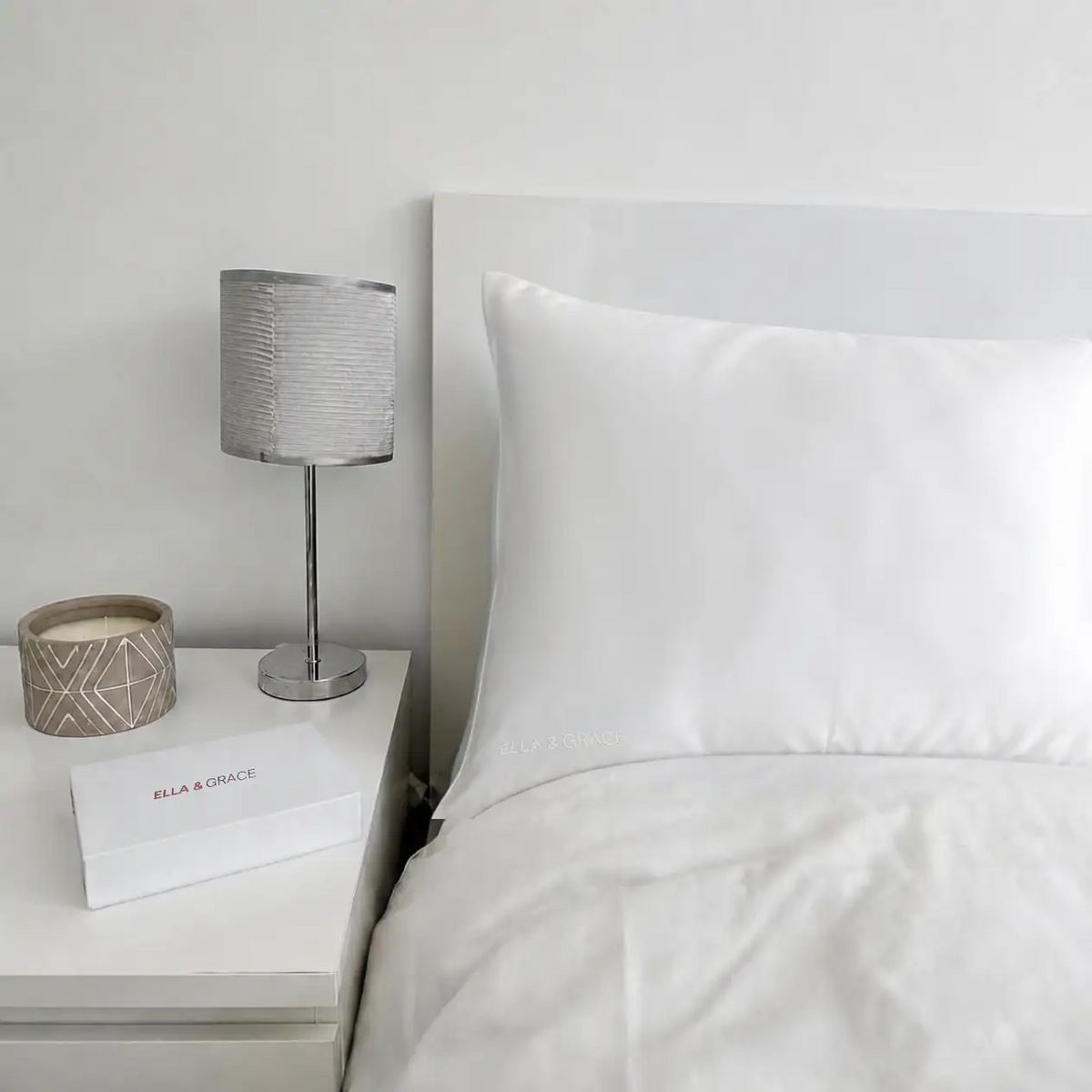
There is something lovely about slipping into a bed that feels fresh, comfortable and inviting at the end of a long day. But beyond the feeling of luxury, you may be wondering whether a silk pillowcase is actually worth the investment.
Silk pillowcases have become a popular part of beauty and bedtime rituals, with claims ranging from smoother-looking skin to less frizzy hair. Yet with prices varying considerably, it can be difficult to know what genuinely makes a difference and what is simply good marketing.
The truth is that a silk pillowcase won't transform your skin or solve every hair concern overnight. However, its smooth surface, distinctive feel and material properties offer some practical benefits that may make it a worthwhile addition to your sleep environment and can make a meaningful difference over time.
In this guide, we'll explore the potential benefits of silk pillowcases for skin, hair and comfort, what to look for when choosing one, and whether investing in quality silk is right for you.
What are the benefits of a silk pillowcase?
A high-quality silk pillowcase offers several potential advantages:
-
Less friction against skin and hair: Silk's smooth surface allows skin and hair to move more easily across the pillow.
-
A more considered beauty ritual: Silk can complement your existing skincare and haircare routine.
-
A naturally smooth, soft feel: Silk has a distinctive texture that many people enjoy against their skin.
-
A comfortable sleeping surface: Its feel and breathable properties may appeal to people who prefer natural fibres.
-
A little everyday luxury: Quality bedding can make your bedroom feel more inviting and your bedtime ritual more enjoyable.
Can a silk pillowcase benefit your skin?
Our skin spends hours in contact with our pillowcase every night. The material we sleep on is therefore worth considering, particularly if you are interested in how your skin feels when you wake up. Here are some of the benefits to your skin:
Less friction against your face
When you sleep on your side or stomach, your face can press against your pillow for extended periods. Depending on the fabric and your sleeping position, this contact can create friction and leave temporary marks or creases. Silk has a naturally smooth surface, which allows your skin to glide across the fabric more easily. This may help reduce friction compared with some rougher materials such as cotton. You may notice fewer pronounced pillow marks when you wake up, although this will vary from person to person.
It is important to distinguish temporary sleep creases from established wrinkles. A silk pillowcase cannot prevent the natural ageing process or reverse existing wrinkles, and there is there is no clinical proof that silk stops biological aging, fixes existing deep wrinkles, or replaces proper skincare.
What about skin hydration?
Your skin has a natural barrier that helps maintain moisture. Your skincare products, the environment and your everyday skincare habits all influence how your skin feels.
Different fabrics interact with moisture differently. Silk generally absorbs less moisture than cotton, which is why it is a good choice of fabric for preserving nightly skincare routines.
For some people, sleeping on silk may help reduce the amount of moisture transferred to their pillowcase. However, it has not been established that sleeping on silk produces a meaningful improvement in skin hydration for everyone.
A silk pillowcase is best viewed as a potential complement to a consistent skincare routine, rather than a replacement for moisturiser, sun protection or appropriate dermatological advice.
Is silk suitable for sensitive skin?
Silk's smooth, soft feel may appeal to people who find certain bedding materials uncomfortable against their skin.
However, having a silk pillowcase does not automatically mean it is hypoallergenic or suitable for every skin condition. Pillowcases can accumulate sweat, skincare products, oils and other residues regardless of their material.
If you have sensitive or acne-prone skin, regular washing and a consistent skincare routine remain important. Persistent irritation or skin concerns are best discussed with a qualified healthcare professional.
2. Can a silk pillowcase help with frizzy hair and tangles?
Hair is another reason many people consider switching to silk. Overnight, your hair moves against your pillow as you change position. Friction can contribute to tangling and frizz, particularly if your hair is curly, textured, dry, chemically treated or prone to breakage.
A smoother surface for your hair
Silk's smooth texture allows hair to move across the pillow with less friction than many coarser fabrics.
This may help reduce overnight tangling and friction-related frizz. For some people, that can mean spending less time detangling their hair in the morning or finding it easier to maintain their usual style.
The difference will depend on your hair type, its condition, your sleeping position and how you care for it.
Could silk help reduce hair breakage?
Repeated friction can contribute to damage, particularly when hair is already fragile or prone to breakage.
Reducing unnecessary friction is therefore a sensible part of a gentle haircare approach. A silk pillowcase may help by providing a smoother surface for your hair to move against during the night.
It is not, however, a treatment for hair loss and cannot guarantee that hair will not break.
For a more complete overnight haircare routine, consider gently detangling your hair before bed, avoiding unnecessarily tight hairstyles and using products suited to your hair type.
A silk pillowcase can be one small part of that approach.
Does a silk pillowcase help you sleep better?
This is an important distinction: a silk pillowcase is not a sleep treatment, and there is limited evidence that silk itself improves sleep quality. However, comfort is an important part of your sleep environment.
The texture of your bedding, the temperature of your room, unwanted light and noise can all influence how comfortable your surroundings feel when you settle down for the night.
Silk has a distinctive smooth feel and can be an appealing choice for people who enjoy natural fibres against their skin. Its comfort and thermal properties will depend on the fabric, the wider bedding setup and your personal preferences.
If you tend to feel uncomfortable with your bedding, choosing materials that feel pleasant to sleep on may be a worthwhile change.
It is also helpful to consider the wider environment: keeping your bedroom comfortably cool, reducing unwanted light and allowing yourself time to wind down can all contribute to a more sleep-friendly setting.
A silk pillowcase won't solve every sleep difficulty, but it can be a considered part of creating a bedroom that feels comfortable and inviting.
Is mulberry silk better than ordinary silk or satin?
Not all pillowcases described as silky are made from silk. Understanding the difference between silk, satin and different grades of silk can help you make a more informed decision.
Silk versus satin
Silk is a natural fibre, whereas satin describes a type of weave or fabric finish. Satin can be made from silk, polyester or other fibres. This means a satin pillowcase is not necessarily a silk pillowcase. The feel, care requirements and material properties will depend on the fibre used.
When comparing products, look beyond words such as "silky" or "satin finish" and check the actual material composition.
What is mulberry silk?
Mulberry silk is produced by silkworms fed primarily on mulberry leaves. It is widely used in premium silk bedding because it can produce a fine, smooth and consistent fabric.
When choosing a silk pillowcase, consider the fibre, the quality of the fabric, the construction and how the product is designed to be cared for.
What does 22 Momme mean?
Momme is a traditional unit used to describe the weight of silk fabric. It helps you compare the weight of silk fabrics, although it is not a complete measure of quality on its own.
A 22 Momme silk pillowcase is made from a relatively substantial silk fabric compared with lighter weights commonly used in silk bedding.
It is worth considering momme alongside the grade and composition of the silk, the quality of the stitching, the design and the care instructions.
How do you choose a silk pillowcase worth the investment?
If you are considering spending more on your bedding, there are several things worth checking before you buy.
Check that it is genuine silk. Look for a clear statement of the fibre composition rather than relying on words such as satin or silky.
Look at the silk specification. Details such as the grade and momme weight can help you understand what you are buying.
Consider how it feels. A pillowcase should feel comfortable against your skin and suit your personal preferences.
Check the construction. Quality stitching, a considered design and a secure fit all contribute to the overall experience.
Understand the care requirements. Silk needs appropriate care to help preserve its appearance and feel. Always follow the manufacturer's instructions.
Consider how often you will use it. A pillowcase is something you may use every night, so the value is not just in its appearance but in how it fits into your everyday life.
Ultimately, the right pillowcase is one that meets your expectations for material, comfort, quality and care.
How to care for your silk pillowcase
A little care can help keep your silk pillowcase looking and feeling its best.
-
Follow the manufacturer's washing instructions.
-
Use a suitable gentle detergent.
-
Avoid harsh treatments and temperatures that could damage the fibres.
-
Allow the pillowcase to dry according to its care instructions.
-
Change and wash your pillowcase regularly, particularly if you use skincare products overnight or tend to sweat.
Although silk is a premium material, it still needs regular cleaning. Its smooth surface does not remove the need for good bedding hygiene.
Discover the Ella & Grace Silk Pillowcase
At Ella & Grace, we believe the things we use every night should be more than beautiful. They should have a reason to be there.
Our approach brings together clinical insight, thoughtful materials and considered design to help make your time to rest more comfortable and intentional. Because better nights aren't just about how you sleep. They're about how you feel when you wake up, and having the energy to show up for the things that matter most.
The Ella & Grace Silk Pillowcase is made from 100% 6A Grade Mulberry Silk in 22 Momme fabric, with OEKO-TEX Standard 100 certification. Every detail has been considered to bring quality, comfort and a little everyday luxury to your sleep ritual.
Available in Soft Blush Pink, Twilight Blue and Moonlight White, each pillowcase arrives in our signature magnetic gift box, making it a considered addition to your own sleep ritual or a thoughtful gift for someone special.
Because rest isn't something you have to earn. It's part of living well.
Explore the Ella & Grace Silk Sleep Ritual Pillowcase and discover the difference thoughtful details can make to your nights.
So, is a silk pillowcase worth it?
For many people, a silk pillowcase is worth considering for its smooth feel, potential to reduce friction against hair and skin, and the everyday comfort it brings to their bedding.
The benefits should be kept in perspective. Silk is not a miracle solution for wrinkles, acne, hair loss or poor sleep, and research into its specific skincare and sleep benefits remains limited.
What it can offer is a considered combination of material quality, comfort and a more luxurious bedtime experience.
If those are things you value, investing in a well-made silk pillowcase may be a worthwhile choice.
Sometimes, making time for rest begins with the small changes you make.
At Ella & Grace, we believe better nights start with the rituals that help you slow down, switch off and wake feeling your best.


Leave a comment
This site is protected by hCaptcha and the hCaptcha Privacy Policy and Terms of Service apply.